
Why Korean BBQ Is Always Shared
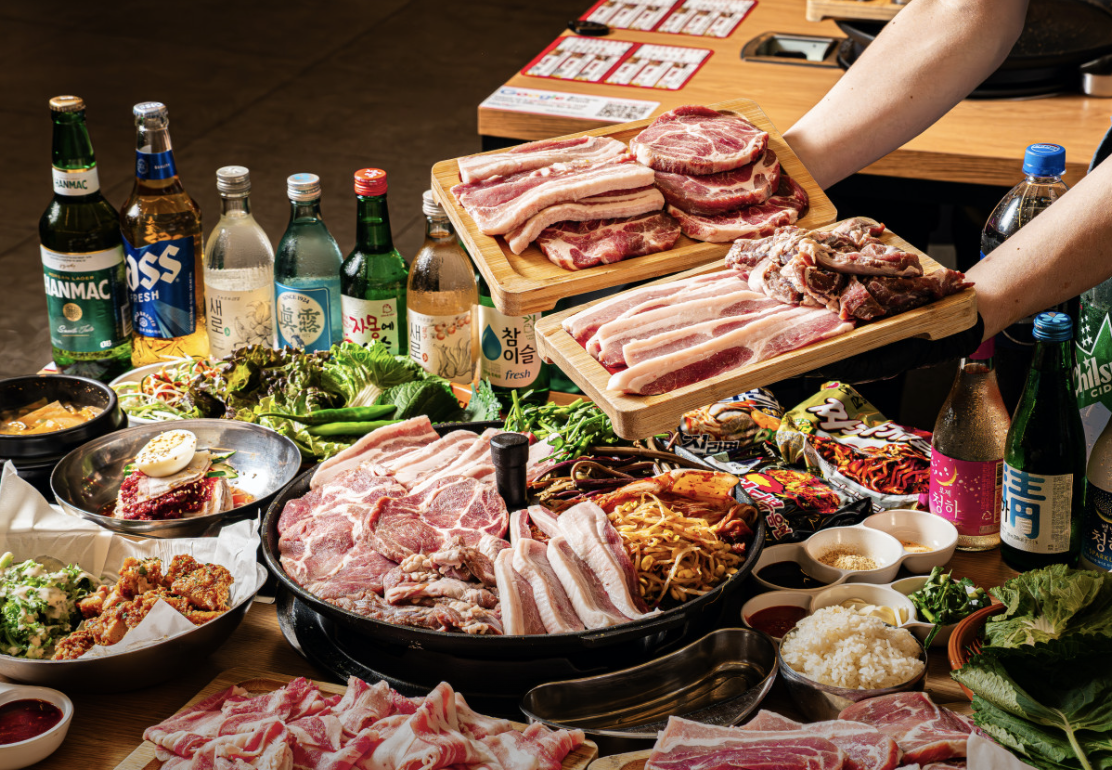
The Culture, History, and Social Meaning Behind Korean BBQ in Seoul
If you have ever eaten Korean BBQ in Seoul, you probably noticed one thing immediately: no one eats alone. The grill sits in the center of the table, meat is cooked together, side dishes are passed around, and conversation flows continuously.
This raises an important question:
Why is Korean BBQ always shared?
Whether you are dining in Myeongdong, Hongdae, or Gangnam, Korean BBQ is built around group interaction. It is not simply about food. It reflects Korean dining culture, history, and social values.
In this guide, we’ll explore the cultural roots of Korean BBQ sharing, the role of pork belly in group dining, the connection to company dinners, and why communal grilling remains central to the Korean BBQ experience.
The Core of Korean Dining Culture: Community Over Individualism
To understand why Korean BBQ is always shared, you need to understand a broader cultural pattern.
Korean meals traditionally emphasize:
Communal dishes
Shared side dishes (banchan)
Group seating
Collective dining
Unlike Western dining, where each person orders a separate plate, Korean food culture often centers around dishes placed in the middle of the table.
Rice may be individual, but most other dishes are shared.
Korean BBQ follows this tradition.
The Grill in the Center: A Symbol of Togetherness
At a Korean BBQ restaurant, the grill is placed in the middle of the table. That design is intentional.
The central grill encourages:
Interaction
Eye contact
Conversation
Cooperation
When meat is cooked at the table, everyone becomes involved in the process. Someone grills. Someone cuts the meat. Someone refills side dishes. Someone pours drinks.
The meal becomes an activity, not just consumption.
This is very different from plated dining.
Historical Roots of Shared Korean Meals
Korea has historically been an agricultural society where family and community bonds were strong.
Meals were moments to:
Reinforce hierarchy
Strengthen relationships
Celebrate together
Share resources
Food was not just fuel. It was a social connector.
Even during periods of economic hardship in the 20th century, shared meals remained important. When resources were limited, sharing reinforced unity.
Korean BBQ evolved within this cultural framework.
The Rise of Pork Belly and Group Dining
Pork belly (samgyeopsal) became widely popular during South Korea’s rapid industrialization in the 1970s and 1980s.
Factory workers and office employees needed:
Affordable protein
Filling meals
Places to gather after work
Pork belly was:
Affordable
Easy to grill
Ideal for sharing
Compatible with soju
Group grilling allowed coworkers to bond. This practice became embedded in Korean work culture.
Today, shared pork BBQ remains one of the most common group dining choices in Seoul.
CLICK TO READ : The History of Pork Belly in Korea
Korean Company Dinners (Hoesik) and Shared BBQ
The concept of “hoesik” (company dinner) plays a major role in why Korean BBQ is shared.
After-work gatherings often involve:
Shared grilling
Drinking together
Informal conversation
Relationship building
In these settings:
The oldest or highest-ranking person may control the grill.
Younger employees pour drinks for seniors.
Food is passed around respectfully.
The act of sharing reinforces social structure and unity.
Korean BBQ naturally supports this environment because it requires interaction.
Why Pork BBQ Works Better When Shared
From a practical standpoint, Korean BBQ is designed for group eating.
Continuous Cooking
Unlike plated meals, Korean BBQ unfolds gradually. Meat is grilled in batches and eaten immediately. If eaten alone, the grill would often feel inefficient.
In a group, the flow feels natural.
Balanced Flavors
Pork belly is rich and fatty. It is balanced by:
Lettuce
Perilla leaves
Kimchi
Garlic
Ssamjang
These side dishes are shared, creating harmony across the table.
Portion Control Through Sharing
Because meat is cut into bite-sized pieces and placed in the center, everyone takes moderate portions. Sharing prevents excess while maintaining abundance.
Why Eating Korean BBQ Alone Feels Different
While solo Korean BBQ is possible, it changes the atmosphere.
Without a group:
The grill feels oversized.
Conversation is limited.
The rhythm of cooking slows.
Korean BBQ was not designed for isolation. It was built around community.
This is why most Korean BBQ restaurants are structured for two or more diners.
Sharing Builds Emotional Connection
Modern research on communal dining suggests that shared meals increase:
Trust
Bonding
Positive communication
In Korea, this concept has long existed culturally.
Sharing Korean BBQ:
Breaks down formal barriers
Encourages relaxed interaction
Creates shared memory
The act of grilling together lowers social tension.
Shared Side Dishes (Banchan): A Cultural Signature
No discussion of Korean BBQ sharing is complete without mentioning banchan.
Banchan includes:
Kimchi
Pickled vegetables
Garlic
Fermented sauces
Fresh greens
These dishes are placed in the center and refilled as needed.
Unlike Western dining, where appetizers may be individual, Korean banchan reinforces communal eating.
The expectation is that everyone will share.
Myeongdong, Hongdae, and Gangnam: Shared BBQ Across Districts
In different districts of Seoul, Korean BBQ maintains its shared identity.
Myeongdong
Tourists gather after shopping and experience communal grilling for the first time.
Hongdae
Students and young adults share affordable all-you-can-eat pork BBQ in energetic settings.
Gangnam
Office workers gather after work for group dinners around the grill.
The district may change. The shared format does not.
Korean BBQ and Drinking Culture
Alcohol plays a significant role in why Korean BBQ is shared.
Soju and beer are often consumed alongside pork belly.
Drinking etiquette includes:
Pouring for others
Holding glasses with two hands
Saying “geonbae” (cheers) together
These rituals reinforce group unity.
Shared food and shared drinks create a complete social experience.
The Psychological Appeal of Shared Grilling
There is something satisfying about cooking together.
Grilling at the table:
Engages attention
Creates anticipation
Encourages conversation
Makes the meal interactive
Unlike passive dining, Korean BBQ feels active.
This interactivity strengthens its communal nature.
Is Sharing Mandatory in Korean BBQ?
In practice, yes.
Even in casual settings:
Meat is placed in the center.
Side dishes are communal.
The grill is shared.
It is culturally expected that Korean BBQ be a collective experience.
CLICK TO READ : Pig Company Korean BBQ: What Makes Our Pork BBQ Different in Seoul
Frequently Asked Questions
Why is Korean BBQ always shared?
Korean BBQ reflects traditional Korean dining culture, which emphasizes communal dishes and group interaction. The table grill design naturally supports sharing.
Can you eat Korean BBQ alone?
Yes, but most restaurants are designed for group dining. The experience is more common and culturally meaningful when shared.
Why do Koreans grill meat at the table?
Table grilling encourages interaction and ensures fresh, hot meat is eaten immediately. It also reinforces communal participation.
Is sharing food common in Korean culture?
Yes. Shared dishes are a long-standing tradition in Korean meals, especially in family and group settings.
Why is pork belly so common in shared BBQ?
Pork belly became popular as an affordable, group-friendly cut during Korea’s industrial era. It grills easily and pairs well with shared side dishes and drinks.
Final Thoughts: More Than Just a Meal
Korean BBQ is always shared because it was built that way.
It reflects:
Cultural values
Historical dining habits
Work culture traditions
Social bonding practices
The central grill is not just for cooking. It is a symbol of connection.
Whether you are eating in Myeongdong, Hongdae, or Gangnam, the shared nature of Korean BBQ remains constant.
In a fast-moving city like Seoul, sitting around a grill and cooking together slows things down. It encourages conversation, laughter, and shared experience.
That is why Korean BBQ is never just about meat.
It is about people.
find us here!
Gangnam Location
Address : 2nd Floor, Gangnam-daero 98-gil, Gangnam-gu, Seoul, South Korea
Hours : 11:30AM to 11:30PM daily
Contact : (+82)2-2-561-8891
Hongdae Location
Address : 28, Hongik-ro 5-an gil, Seogyo-dong, Mapo-gu, Seoul, South Korea
Hours : 11:30AM to 12:00AM daily
Contact : (+82)2-322-8891
Myeongdong Location
Address : 3rd Floor, Myeongdong 3-gil 44, Jung-gu, Seoul, South Korea
Hours : 11:30AM to 2:00AM daily
Contact : (+82)2-318-2990
