
The History of Pork Belly in Korea
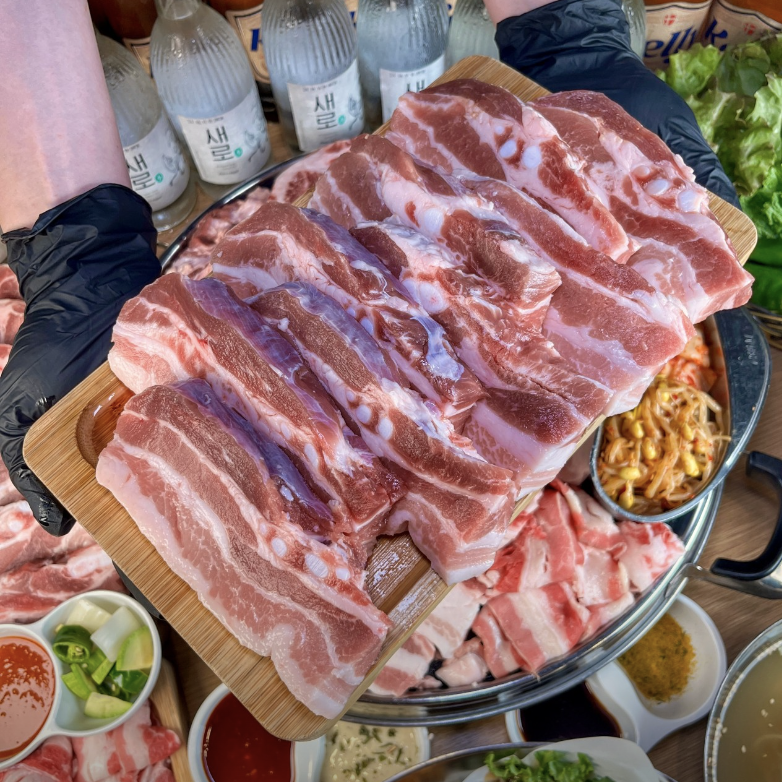
How Samgyeopsal Became Korea’s Most Popular BBQ Dish
If you search for pork belly in Korea, one word appears everywhere: samgyeopsal.
Today, pork belly is one of the most popular meats in Korean cuisine. It is grilled at tables across Seoul, paired with soju after work, eaten during celebrations, and served in all-you-can-eat Korean BBQ restaurants from Myeongdong to Hongdae to Gangnam.
But pork belly was not always the star of Korean BBQ.
To understand how samgyeopsal became Korea’s most iconic grilled meat, we need to look at history, economy, culture, and changing food trends.
What Is Pork Belly in Korean Cuisine?
Pork belly, known in Korean as samgyeopsal (삼겹살), literally means “three-layered flesh.”
The name refers to the visible layers of meat and fat:
Lean meat
Fat
Lean meat
Unlike bacon in Western countries, Korean pork belly is typically not cured or smoked. It is served fresh and grilled directly at the table.
This difference is important. Korean pork belly is about:
Fresh grilling
Fat rendering naturally
Eating with vegetables
Shared dining
It is simple, but culturally powerful.
➤ READ ALSO : Pork Belly (Samgyeopsal) Korean BBQ Guide | Pig Company Meat Cuts Series #1
Pork in Traditional Korean History
Historically, beef was more valued in Korea than pork.
During the Joseon Dynasty (1392–1897), cattle were considered essential for farming. Because cows were needed for agriculture, slaughtering them was restricted. This meant beef was rare and reserved for special occasions.
Pork, on the other hand, was more accessible.
However, pork belly specifically was not always desirable. In earlier periods, fattier cuts were less popular because:
Refrigeration did not exist
Preservation was difficult
Fat spoiled faster
Leaner cuts were easier to manage
For centuries, pork was eaten in stews, boiled dishes, and preserved preparations rather than grilled in large fatty slabs.
So how did pork belly become the centerpiece of Korean BBQ?
Industrialization and the Rise of Pork Belly in Korea
The transformation began in the 1970s and 1980s.
During South Korea’s rapid industrialization, factory workers needed:
Affordable protein
Quick, filling meals
Social dining options after long workdays
At the time, certain pork cuts were exported while fattier cuts like pork belly were left in domestic markets. This increased supply made pork belly relatively inexpensive compared to beef.
Restaurants began grilling pork belly simply with salt and serving it with raw garlic, lettuce, and fermented sauces.
It was cheap.
It was filling.
It paired perfectly with soju.
And it spread rapidly among workers.
The Soju Connection: Why Pork Belly Became a Social Food
You cannot separate pork belly from soju in modern Korean culture.
After-work dining, known as hoesik (회식), became common in the 1980s and 1990s. Office workers gathered to eat and drink together.
Pork belly was ideal because:
It cooked quickly
It was easy to share
It balanced alcohol
It was affordable for groups
The ritual of grilling meat together at one table reinforced teamwork and hierarchy within companies.
Over time, samgyeopsal became more than food. It became social glue.
The Evolution of Korean BBQ Culture
In the past, grilling meat was often done over charcoal in outdoor settings. As cities modernized, indoor grilling systems became standard.
Korean BBQ restaurants introduced:
Built-in table grills
Ventilation systems
Gas and charcoal options
Dedicated pork-focused menus
Pork belly became the center of this dining format because it was forgiving. Even inexperienced grillers could cook it successfully.
This accessibility made it popular among:
University students
Families
Travelers
Large groups
Today, searches for “Korean pork belly BBQ” and “samgyeopsal in Seoul” continue to grow globally.
Why Pork Belly Became More Popular Than Beef in Korea
Beef remains important in Korean cuisine, especially premium cuts like Hanwoo.
However, pork belly became more widely consumed because:
It was cheaper during industrial growth.
It worked perfectly for group dining.
It paired well with alcohol.
It was adaptable to modern grilling technology.
Beef became associated with special occasions.
Pork belly became everyday celebration.
The Modern Samgyeopsal Experience
Today, pork belly in Korea is rarely eaten alone.
A proper samgyeopsal meal includes:
Fresh lettuce
Perilla leaves
Kimchi
Garlic
Ssamjang (fermented soybean-chili paste)
Sesame oil with salt
You place grilled pork belly into a leaf, add condiments, fold it, and eat it in one bite.
This balance of fat, salt, spice, and freshness is what defines Korean BBQ.
It is not just about meat. It is about combination.
Pork Belly in Seoul: Myeongdong, Hongdae, and Gangnam
In modern Seoul, pork belly restaurants exist in every district.
In Myeongdong, samgyeopsal is popular among tourists after shopping.
In Hongdae, university students gather for affordable all-you-can-eat pork BBQ.
In Gangnam, office workers enjoy pork belly during after-work dinners.
Pig Company operates in all three districts, reflecting how universal pork belly has become across demographics.
The appeal is not limited to one age group or income level.
The Global Rise of Korean Pork Belly
Over the past two decades, Korean BBQ has expanded internationally.
As Korean pop culture grew through K-pop, dramas, and social media, samgyeopsal gained international attention.
People became curious about:
Why Koreans grill meat at the table
Why pork belly is eaten with lettuce
Why kimchi is paired with fatty cuts
Today, “Korean pork belly” is a recognized term in global food culture.
Is Pork Belly Healthy?
Pork belly is high in fat compared to lean cuts.
However, Korean-style consumption differs from Western bacon-heavy meals.
In Korean BBQ:
Meat is eaten with vegetables
Portions are wrapped, not stacked
Fermented side dishes aid digestion
Meals are shared rather than oversized individually
Moderation and balance matter.
Why Pork Belly Remains King of Korean BBQ
Despite new trends like premium beef tasting menus and specialty cuts, samgyeopsal remains dominant.
Why?
Because it is:
Accessible
Affordable
Social
Flavorful
Easy to grill
It fits Korea’s dining culture perfectly.
Frequently Asked Questions About Pork Belly in Korea
What is samgyeopsal?
Samgyeopsal is fresh, uncured pork belly grilled at the table and eaten with vegetables and sauces.
Why do Koreans eat pork belly with lettuce?
Wrapping pork belly with lettuce balances the richness of the fat and adds freshness.
When did pork belly become popular in Korea?
It became widely popular during the 1970s–1980s industrial era as an affordable group meal.
Is pork belly the most popular Korean BBQ meat?
Yes. Samgyeopsal remains the most widely consumed BBQ cut in Korea.
The Cultural Meaning of Pork Belly in Korea
Pork belly is more than just a cut of meat.
It represents:
After-work bonding
Student gatherings
Family dinners
Casual celebrations
Late-night meals
It is accessible enough for everyday life but satisfying enough for special moments.
From factory workers in the 1980s to modern diners in Seoul’s busiest districts, samgyeopsal has remained constant.
Final Thoughts: From Humble Cut to National Icon
The history of pork belly in Korea reflects the country’s rapid transformation.
What began as an affordable cut during industrial expansion became the centerpiece of modern Korean BBQ culture.
Today, whether you are dining in Myeongdong, Hongdae, or Gangnam, pork belly remains at the heart of the table.
It is simple, but deeply rooted in Korean history and social tradition.
And that is why samgyeopsal continues to define Korean BBQ in Seoul and beyond.
find us here!
Gangnam Location
Address : 2nd Floor, Gangnam-daero 98-gil, Gangnam-gu, Seoul, South Korea
Hours : 11:30AM to 11:30PM daily
Contact : (+82)2-2-561-8891
Hongdae Location
Address : 28, Hongik-ro 5-an gil, Seogyo-dong, Mapo-gu, Seoul, South Korea
Hours : 11:30AM to 12:00AM daily
Contact : (+82)2-322-8891
Myeongdong Location
Address : 3rd Floor, Myeongdong 3-gil 44, Jung-gu, Seoul, South Korea
Hours : 11:30AM to 2:00AM daily
Contact : (+82)2-318-2990
