
What Are Banchan? A Tourist’s Guide to Korean BBQ Side Dishes
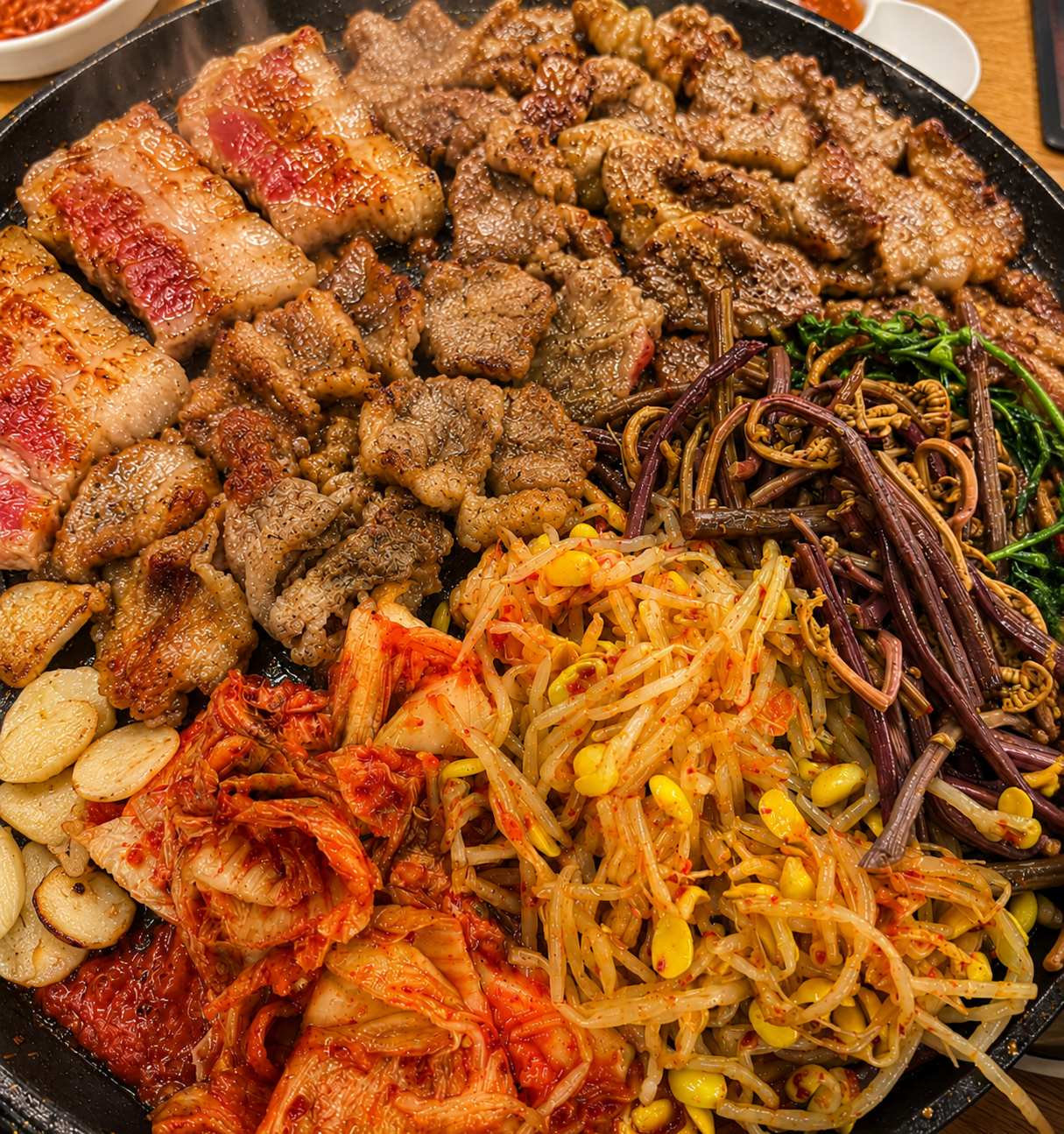
If you are eating Korean BBQ for the first time, one of the first things you will notice is the table.
Before the meat is even cooked, the table starts filling up with small plates. Kimchi, garlic, sauces, lettuce, pickled vegetables, seasoned greens, onions, and other side dishes may appear around the grill. For tourists, this can feel exciting but also confusing. You may wonder what everything is, whether it is included, how to eat it, and whether you are supposed to finish all of it.
These small Korean side dishes are called banchan.
Banchan are an important part of Korean food culture. They are not just decoration. They are not random extras. They are part of how Korean meals are built. In Korean BBQ, banchan help balance the meat, add different textures, make wraps more flavorful, and turn grilled pork into a complete meal.
This matters especially when eating samgyeopsal, or Korean grilled pork belly. Samgyeopsal is rich, savory, and fatty, so it tastes best with side dishes that add freshness, spice, acidity, and crunch. Kimchi cuts through the richness. Garlic adds sharpness. Lettuce makes the bite lighter. Ssamjang gives depth. Pickled vegetables refresh your mouth between bites.
At Pig Company, guests can enjoy Korean pork BBQ and Korean fried chicken at three Seoul branches: Myeongdong, Hongdae, and Gangnam. Whether you are shopping in Myeongdong, going out in Hongdae, or exploring COEX and Gangnam, understanding banchan will make your Korean BBQ meal much better.
This guide explains what banchan are, how to eat them, which side dishes usually appear at Korean BBQ, and what tourists should know before sitting down for a pork BBQ meal in Seoul.
What Are Banchan?
Banchan means Korean side dishes. They are small dishes served with a main meal and shared by the table. In Korean food culture, banchan are part of the meal, not separate appetizers.
At a Korean BBQ restaurant, banchan usually appear before or with the meat. They are placed around the grill so everyone at the table can reach them. Depending on the restaurant, banchan may include kimchi, pickled radish, seasoned vegetables, garlic, sauces, lettuce, onions, or other small dishes.
The purpose of banchan is balance.
Korean BBQ meat, especially pork belly, is rich and oily. If you eat only the meat, the meal can feel heavy. Banchan make the meal more balanced by adding freshness, spice, saltiness, sourness, crunch, and acidity.
This is one reason Korean BBQ feels different from simply eating grilled meat. The pork is the center of the meal, but the side dishes create the full experience. Every bite can taste different depending on what you combine with the meat.
For tourists, this is the key thing to understand: banchan are meant to be eaten with the meal.
Do not leave them untouched because you are unsure what they are. Try small bites. Add them to wraps. Eat them between pieces of meat. Use them to build different flavors.
That is how Korean BBQ becomes more than just pork on a grill.
Are Banchan Free?
Tourists often ask whether banchan are free or included. In many Korean restaurants, basic banchan are included with the meal. Korean BBQ restaurants often serve side dishes as part of the table setup.
However, this does not mean every side item in every restaurant is unlimited or free. Basic side dishes may be included, while extra menu items such as rice, stew, noodles, steamed egg, premium sides, drinks, or special dishes may cost extra.
The safe rule is simple: basic small side dishes placed on the table are usually part of the meal, but if you order something separately from the menu, expect to pay for it.
If you are unsure, ask the staff before ordering additional items. There is nothing wrong with checking. Tourists should not feel embarrassed about asking whether something is included.
At Korean BBQ restaurants, it is also common for some banchan to be refillable. But again, refill rules can depend on the restaurant. If you finish kimchi, lettuce, or garlic and want more, you can politely ask. In Korea, this is normal.
The important point is not to waste food. Banchan may look small, but the table can fill up quickly. Take what you need, enjoy it properly, and ask for refills only when you will actually eat them.
Why Banchan Matter in Korean BBQ
Banchan matter because Korean BBQ is built around combination eating.
In some food cultures, the main protein is eaten mostly by itself. Korean BBQ is different. Meat is often eaten with lettuce wraps, sauces, vegetables, garlic, kimchi, and side dishes. The flavor comes from the combination.
Samgyeopsal is a good example. Pork belly has a rich, fatty taste. It is delicious, but if you eat piece after piece without anything else, it can become too heavy. Add kimchi, garlic, ssamjang, and lettuce, and the flavor changes completely.
Banchan also create variety. One piece of pork can be eaten with salt. Another can be wrapped with lettuce and garlic. Another can be eaten with kimchi. Another can be paired with pickled onion. This keeps the meal interesting.
That is why Korean BBQ is such a strong group meal. The table feels active. People grill meat, build wraps, try side dishes, share sauces, and talk while eating. Banchan make the meal interactive.
At Pig Company, this matters because pork BBQ is the main experience. The meat is important, but the side dishes help complete the meal. Tourists who understand banchan will enjoy the BBQ more than tourists who only eat the pork by itself.
Common Banchan at Korean BBQ Restaurants
Banchan can vary from restaurant to restaurant, but some side dishes are very common at Korean BBQ tables. Here are the ones tourists should know.
Kimchi
Kimchi is the most famous Korean side dish. It is usually made from fermented cabbage or radish with chili, garlic, and seasoning. It tastes sour, spicy, salty, and deep.
With Korean BBQ, kimchi is important because it cuts through the richness of pork. A small bite of kimchi with samgyeopsal makes the meat feel less heavy.
Some people also grill kimchi with pork belly. Grilled kimchi becomes softer, smokier, and richer. It pairs especially well with samgyeopsal.
Garlic
Garlic is a major part of Korean BBQ. It may be served raw, but many people prefer grilling it before eating. Grilled garlic becomes softer, sweeter, and less sharp.
You can add garlic to a lettuce wrap with pork and ssamjang. You can also eat it with meat directly. If you are not used to strong garlic, start with a small amount.
Ssamjang
Ssamjang is a thick Korean dipping sauce often used in BBQ wraps. It is savory, salty, slightly spicy, and rich. It is usually made with soybean paste, chili paste, garlic, sesame oil, and other seasonings.
Do not use too much at once. Ssamjang has a strong flavor. A small amount inside a wrap is enough.
Lettuce and Perilla Leaves
Lettuce and perilla leaves are used for ssam, or Korean wraps. Place a piece of grilled pork inside the leaf, add sauce or side dishes, fold it, and eat it in one bite.
Lettuce is mild and fresh. Perilla leaves have a stronger herbal flavor. If you are new to Korean BBQ, start with lettuce first, then try perilla.
Pickled Radish or Pickled Vegetables
Pickled side dishes help refresh your mouth between bites of meat. They add sourness and crunch, which balances the fat from pork belly.
These are especially useful during a long BBQ meal because they keep the food from feeling too heavy.
Onion Salad or Green Onion Salad
Some Korean BBQ restaurants serve seasoned onions or green onion salad. These are often slightly spicy, tangy, or sweet. They pair well with grilled meat and can be added to wraps.
The sharpness of onion works well with pork because it cuts through the richness.
Dipping Salt or Sesame Oil
Some restaurants serve sesame oil with salt and pepper. This is a simple dip for grilled pork. It lets you taste the meat more directly without covering it with heavy sauce.
If you want a cleaner bite, dip samgyeopsal lightly in sesame oil and salt.
How to Eat Banchan With Samgyeopsal
The best way to eat banchan with samgyeopsal is to build different bites.
Start simple. Take one piece of grilled pork belly and dip it in sesame oil and salt. This lets you taste the pork itself.
Then try a classic wrap. Take lettuce, add one piece of samgyeopsal, a little ssamjang, and one piece of garlic. Fold it and eat it in one bite.
Next, add kimchi. Lettuce, pork, ssamjang, garlic, and kimchi create a stronger and more balanced flavor. The kimchi adds acidity and spice, which works well with pork belly.
Then try pickled vegetables between bites. This helps reset your mouth and keeps the meal fresh.
The key is not to eat everything separately. Korean BBQ is best when you combine ingredients. That is why banchan are placed around the table. They are tools for building better bites.
A good samgyeopsal meal should have contrast:
hot grilled pork
cold or fresh vegetables
spicy kimchi
savory ssamjang
sharp garlic
crisp pickles
soft rice, if ordered
That balance is the reason Korean BBQ feels so satisfying.
What Is Ssam?
Ssam means “wrap.” In Korean BBQ, ssam usually means wrapping meat in lettuce or perilla leaves with sauce, garlic, kimchi, or other side dishes.
Ssam is one of the easiest ways to understand banchan because it shows how everything works together.
A basic ssam looks like this:
lettuce + grilled pork + ssamjang + garlic
A stronger ssam might be:
perilla leaf + samgyeopsal + kimchi + garlic + ssamjang
A lighter ssam might be:
lettuce + pork + onion salad
The rule is to keep it small enough to eat in one bite. Tourists often make the wrap too big and then struggle to eat it neatly. A good ssam should be balanced, not overloaded.
Do not put too much sauce. Ssamjang is strong. You only need a little.
Do not add too many side dishes at once. Try different combinations instead of putting everything into one wrap.
Once you understand ssam, Korean BBQ becomes much easier. You stop wondering what each side dish is for and start using them naturally.
Banchan Is Not Decoration
One of the biggest mistakes tourists make at Korean BBQ is treating banchan like decoration.
The small plates may look like table styling, but they are meant to be eaten. If you ignore them, the meal becomes less balanced and less interesting.
Korean BBQ without banchan is just grilled meat. Korean BBQ with banchan becomes a full Korean dining experience.
Kimchi makes pork taste brighter. Garlic adds depth. Lettuce makes each bite lighter. Ssamjang gives flavor. Pickles refresh your mouth. Onion salad adds sharpness. Every small dish has a role.
This is especially true with fatty meats like samgyeopsal. Pork belly needs balance. The banchan are there to provide that balance.
So when you sit down at Pig Company or any Korean BBQ restaurant, do not be afraid to try the side dishes. Start slowly if you are unsure, but use them. That is how the meal is meant to be eaten.
Banchan and Korean Sharing Culture
Banchan also show something important about Korean food culture: meals are often shared.
In Korean dining, the table is communal. People share side dishes, sauces, grilled meat, and sometimes drinks. This creates a different feeling from meals where everyone only eats their own plate.
At Korean BBQ, the grill is already shared, so banchan fit naturally. They sit around the table for everyone to use. People reach for kimchi, lettuce, garlic, and sauces while the meat cooks.
This makes the meal more active and social. Someone may grill meat. Someone may pass lettuce. Someone may ask for more kimchi. Someone may pour drinks. The table feels alive.
For tourists, this is one of the best parts of Korean BBQ. It is not just food. It is interaction.
Pig Company’s food fits this culture because both pork BBQ and Korean fried chicken are shareable. Pork BBQ is grilled and eaten together, while fried chicken can be placed in the center of the table for everyone. This makes Pig Company suitable for friends, families, couples, and groups visiting Seoul.
Do Banchan Change by Restaurant?
Yes. Banchan can change depending on the restaurant, region, season, and menu.
A Korean BBQ restaurant may serve kimchi, garlic, lettuce, sauces, and pickled vegetables. A home-style Korean restaurant may serve vegetable side dishes, tofu, fish cake, eggs, or seasoned greens. A seafood restaurant may have different banchan from a BBQ restaurant.
This variety is part of Korean food culture. There is no single fixed banchan set that appears everywhere.
For Korean BBQ, however, the side dishes usually support grilled meat. That means you are likely to see ingredients that balance meat well: kimchi, garlic, fresh vegetables, dipping sauces, and pickles.
If you visit different BBQ restaurants in Seoul, you may notice differences in the side dishes. Some places keep it simple. Others offer more variety. Some focus on sauces. Others focus on vegetables or pickled items.
The important thing is to understand the purpose. Even when the exact dishes change, banchan are there to support the main meal.
Banchan and Korean Fried Chicken
Banchan are most strongly associated with Korean meals and BBQ, but side dishes also matter when eating Korean fried chicken. Chicken may be served with pickled radish, sauces, or small sides that help balance the fried food.
This is one reason Pig Company’s concept works well. Pork BBQ and Korean fried chicken both benefit from side dishes.
With pork BBQ, banchan help create wraps and balance richness. With fried chicken, pickled sides and sauces help refresh your mouth and keep the meal from feeling too heavy.
For tourists, this means the table feels more complete. You can enjoy grilled pork, crispy chicken, sauces, vegetables, and side dishes together. It is a casual Korean meal that gives more variety than ordering only one dish.
Where to Enjoy Banchan With Korean BBQ in Seoul
If you want to experience banchan with Korean pork BBQ in Seoul, Pig Company has three branches that fit different travel routes.
Pig Company Myeongdong
Pig Company Myeongdong is useful for tourists shopping in Myeongdong, visiting street food stalls, staying at nearby hotels, or coming back from Namsan Seoul Tower. After walking around, pork BBQ with banchan is a better dinner than only eating snacks.
Myeongdong is often where first-time visitors try Korean BBQ, so understanding banchan makes the experience much better.
Pig Company Hongdae
Pig Company Hongdae works well before or after nightlife, busking, cafes, pop-up stores, photo booths, bars, clubs, or karaoke. Pork BBQ and fried chicken are good for groups, and banchan make the meal more balanced before a long night out.
Hongdae has a casual energy, so a shared BBQ table fits the area well.
Pig Company Gangnam
Pig Company Gangnam is a good choice after COEX, Starfield Library, Bongeunsa Temple, shopping, or beauty clinic visits. Gangnam has many dining options, but pork BBQ with banchan gives tourists a relaxed and clearly Korean dinner.
After a polished Gangnam itinerary, Pig Company offers a casual shared meal with pork BBQ, chicken, and side dishes.
Common Mistakes Tourists Make With Banchan
The first mistake is not eating banchan at all. If you leave the side dishes untouched, you miss a major part of the Korean BBQ experience.
The second mistake is eating each side dish separately without trying combinations. Banchan are often best when paired with meat or wraps.
The third mistake is using too much ssamjang. The sauce is strong, so a small amount is enough.
The fourth mistake is making wraps too large. Keep ssam small enough to eat in one bite.
The fifth mistake is assuming every side dish is unlimited. Many basic banchan may be refillable, but not every item is free or unlimited. Ask if you are unsure.
The sixth mistake is wasting food. It is fine to try side dishes slowly, but do not ask for large refills unless you will eat them.
Avoid these mistakes and your Korean BBQ meal will feel smoother and more enjoyable.
Why Tourists Should Learn About Banchan Before Eating Korean BBQ
Learning about banchan before eating Korean BBQ makes the meal less confusing and more enjoyable.
Instead of staring at the table wondering what everything is, you understand the purpose. Kimchi balances pork. Garlic adds flavor. Lettuce makes wraps. Ssamjang seasons the bite. Pickles refresh your mouth. Side dishes are not random; they are part of the meal design.
This is especially useful for first-time visitors who want to enjoy Korean BBQ properly. You do not need to know every dish name, but understanding the role of banchan helps you eat with more confidence.
It also makes the meal more memorable. Korean BBQ is not just about tasting meat. It is about building bites, sharing the table, and trying combinations.
That is exactly what makes Korean food culture different.
Final Thoughts: Banchan Make Korean BBQ Better
Banchan are one of the most important parts of Korean food culture. They may be small, but they change the entire meal.
At Korean BBQ, banchan help balance rich grilled meat, especially samgyeopsal. They add freshness, spice, acidity, crunch, and depth. They make wraps better. They keep the meal from feeling heavy. They turn grilled pork into a full Korean dining experience.
For tourists, the most important thing to remember is simple: banchan are meant to be eaten.
Try the kimchi. Use the garlic. Add ssamjang. Wrap the pork in lettuce. Eat pickled vegetables between bites. Share the side dishes with the table.
At Pig Company, guests can enjoy Korean pork BBQ, Korean fried chicken, and side dishes in three major Seoul areas: Myeongdong, Hongdae, and Gangnam. Whether you are shopping, sightseeing, or going out at night, Pig Company gives tourists a casual way to experience Korean BBQ culture properly.
Banchan are not decoration. They are the small dishes that make Korean BBQ taste complete.
FAQ: Banchan and Korean BBQ Side Dishes
What are banchan?
Banchan are Korean side dishes served with a meal. At Korean BBQ restaurants, they are usually shared by the table and eaten with grilled meat, sauces, vegetables, and wraps.
Are banchan free in Korea?
Basic banchan are usually included with the meal at many Korean restaurants, but rules can vary. Extra menu items such as rice, stew, noodles, or premium sides may cost extra.
Can you ask for more banchan?
Yes, many Korean restaurants allow refills of basic banchan, but this depends on the restaurant and the dish. It is best to ask politely and only request more if you will eat it.
What banchan comes with Korean BBQ?
Common Korean BBQ banchan include kimchi, garlic, lettuce, perilla leaves, ssamjang, pickled vegetables, onion salad, and dipping sauces. The exact side dishes depend on the restaurant.
What is the best banchan for samgyeopsal?
Kimchi, garlic, lettuce, perilla leaves, ssamjang, and pickled vegetables all pair well with samgyeopsal. They balance the richness of pork belly.
Is kimchi a banchan?
Yes. Kimchi is one of the most famous types of banchan. It is often served with Korean BBQ and pairs especially well with pork.
What is ssamjang?
Ssamjang is a thick Korean sauce often used in BBQ wraps. It is savory, salty, slightly spicy, and commonly eaten with grilled pork and lettuce.
What is ssam?
Ssam means “wrap.” In Korean BBQ, it usually means wrapping grilled meat in lettuce or perilla leaves with sauce, garlic, kimchi, or other side dishes.
Do I have to eat all the banchan?
No. You do not have to finish every side dish, but you should try them if you want the full Korean BBQ experience. Avoid wasting food or asking for refills you will not eat.
Where can I try Korean BBQ with banchan in Seoul?
You can enjoy Korean pork BBQ, Korean fried chicken, and side dishes at Pig Company in Myeongdong, Hongdae, and Gangnam. Each branch fits different Seoul travel routes, from shopping and sightseeing to nightlife and casual group dinners.
find us here!
Gangnam Location
Address : 2nd Floor, Gangnam-daero 98-gil, Gangnam-gu, Seoul, South Korea
Hours : 11:30AM to 11:30PM daily
Contact : (+82)2-2-561-8891
Hongdae Location
Address : 28, Hongik-ro 5-an gil, Seogyo-dong, Mapo-gu, Seoul, South Korea
Hours : 11:30AM to 12:00AM daily
Contact : (+82)2-322-8891
Myeongdong Location
Address : 3rd Floor, Myeongdong 3-gil 44, Jung-gu, Seoul, South Korea
Hours : 11:30AM to 2:00AM daily
Contact : (+82)2-318-2990
