
What Is the Best Pork Cut for Korean BBQ? Why Samgyeopsal Still Wins
Korean BBQ looks simple on the surface: meat, fire, grill. But anyone who has eaten Korean BBQ more than once knows the truth — the cut matters as much as the quality. You can have good pork and still end up with a disappointing meal if the cut is wrong for grilling.
Among all pork cuts used in Korean BBQ, one has stayed dominant for decades despite trends, new breeds, and endless variations on menus: samgyeopsal.
This isn’t nostalgia. It’s physics, fat distribution, and eating culture working together.
This article breaks down:
The major pork cuts used in Korean BBQ
What actually makes a cut good for grilling
Why samgyeopsal continues to outperform the rest
And when other cuts might make more sense
What Makes a Pork Cut “Good” for Korean BBQ?
Before naming the best cut, it’s important to understand what Korean BBQ demands from pork.
Korean BBQ grilling is:
High heat
Fast cooking
Minimal seasoning
Table-side cooking, not kitchen-controlled
That immediately rules out many pork cuts that are excellent for roasting, braising, or curing.
A good Korean BBQ pork cut must have:
1. Balanced Fat-to-Meat Ratio
Too lean, and the meat dries out before browning.
Too fatty, and it turns greasy, flares up, and loses structure.
2. Even Thickness
Uneven cuts cook unevenly. In Korean BBQ, the diner is the cook — consistency matters.
3. Clean Pork Flavor
Since seasoning is minimal (salt, sesame oil, ssamjang), the pork itself must taste good.
4. Forgiving Texture
The cut should still taste good even if slightly overcooked. Not every diner is precise with tongs.
Samgyeopsal checks all four boxes better than any other cut.
Common Pork Cuts Used in Korean BBQ (And How They Perform)
Samgyeop-sal (Pork Belly)
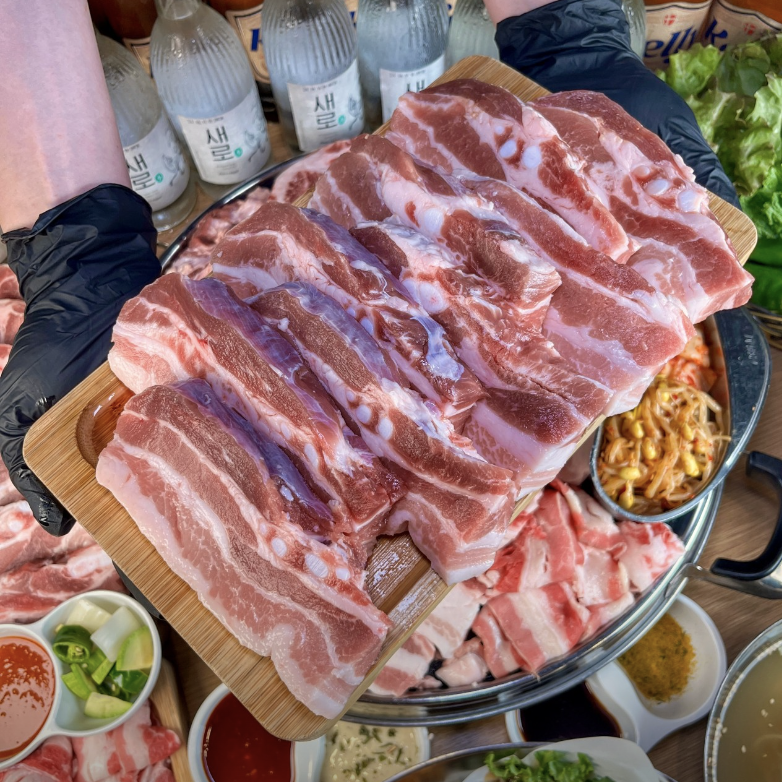
Samgyeopsal comes from the belly, layered with alternating fat and meat.
It is typically sliced thick, not marinated, and grilled directly over high heat.
Why it works:
Fat renders gradually, self-basting the meat
Meat stays juicy even with aggressive grilling
Crisps beautifully on the outside
Pairs well with lettuce, perilla leaves, and strong sauces
This cut is extremely forgiving. Even inexperienced diners can grill it well.
Mok-sal (Pork Neck / Collar)
Moksal is leaner than samgyeopsal but still well-marbled.
Strengths:
Strong pork flavor
Slight chew that meat lovers enjoy
Less grease than belly
Weaknesses:
Dries out quickly if overcooked
Less dramatic texture contrast
It’s excellent when done right, but less beginner-friendly.
GabRi-sal (Pork Rib Meat)
Cut from between the ribs, gabsal is flavorful and meaty.
Strengths:
Deep pork taste
Great with salt or light marinade
Weaknesses:
Uneven thickness
Can turn tough
Requires attention while grilling
Best for experienced diners.
Hangjeong-sal (Pork Jowl / Cheek)
A premium cut with intense marbling.
Strengths:
Extremely juicy
Rich flavor
Weaknesses:
Very fatty
Can overwhelm the palate
Not ideal for large portions
Great as a secondary cut, not a main.
Dwaeji Galbi (Marinated Pork Ribs)
Technically grilled, but culturally different.
Why it doesn’t qualify:
Heavy marinade masks pork flavor
Sugar burns easily
More like grilled marinated meat than true Korean BBQ
Delicious, but not a benchmark for pork quality.
Why Samgyeopsal Still Wins (Even Today)
Samgyeopsal’s dominance isn’t accidental or outdated. It’s structural.
Fat That Works With Fire
The layered fat melts slowly, not instantly. This creates:
Crisp edges
Juicy centers
Controlled flare-ups
Other cuts either dump fat too fast or don’t have enough.
Texture Contrast
Samgyeopsal offers:
Crisp exterior
Tender meat
Soft rendered fat
This contrast is key to why people don’t get bored after multiple bites.
Works With Korean BBQ Culture
Korean BBQ isn’t just about meat. It’s about:
Wrapping in lettuce
Adding raw garlic
Mixing sauces
Eating slowly over time
Samgyeopsal holds up through all of that without falling apart or losing flavor.
It’s Honest Meat
No marinade. No disguise.
If the pork is low quality, samgyeopsal exposes it immediately.
That’s why good restaurants take pork belly seriously.
Is Samgyeopsal Always the Best Choice?
No — but it is the best default choice.
You might prefer other cuts if:
You dislike fatty meat → try moksal
You want intense richness → hangjeongsal
You want lean, meaty bites → gabsal
But if someone asks:
“What pork cut should I order at Korean BBQ?”
Samgyeopsal is still the most reliable answer.
What Separates Good Samgyeopsal From Great Samgyeopsal?
Not all samgyeopsal is equal.
Key factors:
Thickness: Too thin dries out fast
Freshness: Pork belly oxidizes quickly
Breed: Higher-quality breeds have better fat texture
Cutting technique: Grain direction matters
At Pig Company, pork belly is cut thick, served fresh, and grilled over proper heat — because samgyeopsal only works if it’s respected.
Why Pork Quality Matters More Than Ever
As Korean BBQ spreads globally, pork belly has become trendy — but not always treated correctly.
Mass-produced, thin-sliced, frozen samgyeopsal exists.
It grills fast, looks similar, but eats completely differently.
Good samgyeopsal should:
Render slowly
Stay juicy
Taste clean, not porky or sour
That’s the difference diners notice, even if they can’t explain it.
Final Verdict: Why Samgyeopsal Still Wins
Samgyeopsal isn’t popular because it’s easy.
It’s popular because it performs best under Korean BBQ conditions.
It:
Handles high heat
Forgives mistakes
Highlights pork quality
Fits Korean BBQ culture
Trends come and go, but samgyeopsal remains because it works — on the grill, on the table, and over time.
That’s why, even after serving countless tables, it’s still the cut we trust most to represent pork Korean BBQ done right.
find us here!
Gangnam Location
Address : 2nd Floor, Gangnam-daero 98-gil, Gangnam-gu, Seoul, South Korea
Hours : 11:30AM to 11:30PM daily
Contact : (+82)2-2-561-8891
Hongdae Location
Address : 28, Hongik-ro 5-an gil, Seogyo-dong, Mapo-gu, Seoul, South Korea
Hours : 11:30AM to 12:00AM daily
Contact : (+82)2-322-8891
Myeongdong Location
Address : 3rd Floor, Myeongdong 3-gil 44, Jung-gu, Seoul, South Korea
Hours : 11:30AM to 2:00AM daily
Contact : (+82)2-318-2990
