
Beef Large Intestine (Daechang) Korean BBQ Guide | Pig Company Meat Cuts Series #9
Most people come to Korean BBQ expecting the familiar: pork belly, pork neck, maybe some thin-sliced brisket. But if you want the kind of meal that feels genuinely Korean — the kind locals crave when they want something bold — you order beef large intestine.
In Korea, beef large intestine is called daechang (대창). It’s a cut with a strong personality: rich, intense, juicy, and almost unfairly satisfying when grilled correctly. It’s not a “safe” menu item and it’s not meant to be. Daechang is for people who want Korean BBQ with an edge.
At Pig Company, we keep beef large intestine on the menu because it represents something important: Korean BBQ isn’t just meat — it’s culture. And gopchang-style cuts are part of that culture, especially for people who love late-night dining, deep flavors, and a real Seoul food experience.
This post is part of our Pig Company Meat Cuts Series, where we explain every cut we serve in a clear, practical way. If you’ve ever been curious about daechang but didn’t know what it was, how to eat it, or whether you should try it — this guide is for you.
What Is Beef Large Intestine (Daechang)?
Daechang (대창) is beef large intestine. It’s cleaned, prepped, and cut into bite-size pieces for grilling.
What makes daechang unique is what’s inside and around it:
it contains natural fat
it has a chewy outer layer
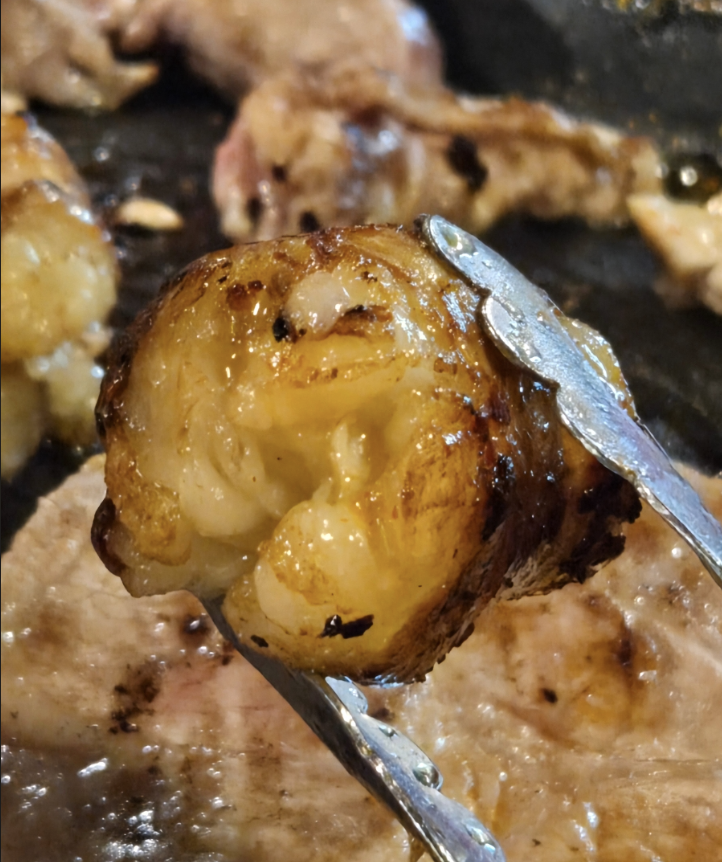
it becomes crispy outside and juicy inside when grilled properly
To put it simply: daechang is not like regular beef. It behaves more like a “texture cut.” The goal isn’t steak-like tenderness — it’s a combination of crunch, chew, and rich fat flavor that you can’t get from standard muscle cuts.
It’s one of the most iconic ingredients in Korean “an-ju” culture (food eaten with drinks), but it’s also loved as a main meal when done well.
What Does Daechang Taste Like?
If you’ve never had daechang before, this is what you can expect:
rich and buttery, especially when the fat renders
crispy on the outside when grilled long enough
juicy inside, almost like a bite of roasted bone marrow
slightly chewy, not tough, but bouncy
Daechang has more character than normal beef cuts. Some people describe the flavor as “deep” or “intense,” because it has a stronger aroma than muscle meat.
That isn’t a flaw — it’s the point.
If you like foods such as:
crispy pork belly edges
beef brisket with rendered fat
grilled fatty cuts like jowl
…daechang has a high chance of becoming your favorite “one more plate” order.
Is Daechang the Same as Gopchang?
Not exactly.
In Korean BBQ, people often group intestines under “gopchang,” but there are different types:
Gopchang (곱창) usually refers to small intestine
Daechang (대창) refers to large intestine
Makchang (막창) is usually the last part of intestine and has a different texture
The easiest way to remember it:
gopchang = smaller, thinner, more bouncy
daechang = thicker, fattier, juicier
If you want the most indulgent intestine experience, daechang is usually the answer.
Why Daechang Is a Must-Try Korean BBQ Cut (At Least Once)
Daechang isn’t for everyone — and that’s exactly why it’s worth trying.
1) It’s One of the Most “Korean” Korean BBQ Foods
Many tourists eat Korean BBQ and leave thinking it’s only about pork belly. But locals know the deeper world is:
intestines
offal cuts
grilled textures
Daechang is a true Seoul-style BBQ experience.
2) It Gives You Texture You Can’t Fake
A lot of foods try to feel “crispy and juicy.”
Daechang actually delivers it naturally:
crisp outer edge after grilling
juicy fat inside that melts
It’s not a sauce trick. It’s the cut itself.
3) It’s the Perfect Late-Night Korean BBQ Cut
Daechang is extremely popular in Korea as a night meal because:
it feels rich and satisfying
it pairs well with drinks
it hits harder than standard cuts
When someone says “I want something good tonight,” daechang is the type of food they mean.
How to Grill Beef Large Intestine Properly (So It Doesn’t Get Greasy)
Here’s the truth: daechang is easy to mess up if you treat it like pork belly.
It needs patience and heat control.
Step 1: Don’t Rush It
Daechang needs time for the outer layer to crisp and the fat to render properly.
If you eat it too early, it can taste:
overly chewy
too oily
not developed
The flavor improves dramatically after it has browned.
Step 2: Keep It Moving, But Not Constantly
You don’t want to flip it every two seconds, but you also don’t want one side to burn.
Aim for:
gradual browning
even crispness
Step 3: Let Excess Fat Render Out
Part of daechang’s satisfaction is the fat — but the best daechang isn’t swimming in oil.
As it cooks, you’ll see fat release onto the grill. This is normal. The goal is to render enough so the piece becomes:
crisp
concentrated in flavor
not heavy
Step 4: Cut Pieces Smaller If Needed
Some diners like bigger bites, but daechang is often best cut smaller so every piece has:
more surface area
more crispness per bite
At Pig Company, we want daechang to be enjoyable, not overwhelming.
The Best Way to Eat Daechang (Sauces + Pairings)
Daechang has strong flavor, so pairing matters.
1) Salt (Simple, Best for the First Bite)
Start plain.
Salt helps you understand the cut:
its fat sweetness
its crispness
its natural flavor
2) Ssamjang (The Most Korean Pairing)
Ssamjang gives daechang structure — savory, slightly sweet, and spicy enough to cut richness.
But use a small amount. Too much makes it feel heavy.
3) With Kimchi (Best for Balance)
Kimchi and daechang work because kimchi brings acidity and spice.
The combo is:
rich + sour
fatty + sharp
crispy + juicy
If you want the most satisfying bite, do daechang + grilled kimchi.
4) Wrapped in Lettuce (If You Want It Lighter)
Yes, you can ssam daechang.
Wrap it with:
lettuce
a small piece of daechang
garlic or green chili (optional)
This makes it easier to eat more without feeling overwhelmed.
Who Should Order Beef Large Intestine?
Daechang is perfect for:
people who love rich cuts (jowl, brisket fat, pork belly edges)
guests who want a true Korean BBQ experience
adventurous eaters
late-night diners
It might not be ideal for:
people who only like lean meats
very sensitive eaters who dislike strong aromas
anyone expecting steak texture
But if you’re even slightly curious, it’s worth trying once — because it’s one of those foods that’s either a surprise favorite or a “now I understand why Koreans love it.”
Why Pig Company Has Beef Large Intestine (And Why We Keep It)
Some restaurants avoid intestine cuts because they require more effort and aren’t “universal.”
We keep beef large intestine at Pig Company for a few simple reasons.
1) Because Korean BBQ Isn’t Only About Safe Cuts
Anyone can serve pork belly.
But a Korean BBQ menu isn’t complete unless it includes something with deeper character — something that feels like Seoul, not just “Korean BBQ as a trend.”
Daechang represents the side of Korean BBQ that locals take seriously.
2) Because It’s One of the Most Addictive Cuts When Done Properly
Daechang has a reputation:
people crave it
people order it again
people remember it
When guests try it for the first time and say, “Wait… this is really good,” that’s the moment we want.
3) Because It Balances a Pork-Heavy Meal
Pig Company is known for pork BBQ, but great Korean BBQ meals need rhythm and contrast.
Daechang adds:
deeper richness than pork neck
a different texture than pork belly
a more intense “night meal” vibe than brisket
It’s the cut that makes your table feel like a real Korean night out.
4) Because Myeongdong and Hongdae Guests Actually Look for It
Tourists who do research often search:
“Korean BBQ intestines”
“gopchang in Seoul”
“daechang Korean BBQ”
Keeping this cut on the menu makes Pig Company a place where guests can go beyond the basic experience — without needing a separate specialty restaurant.
FAQ: Beef Large Intestine (Daechang)
Is daechang safe to eat?
Yes — when properly cleaned and prepared by a restaurant. Daechang is a common Korean dish and served widely across Seoul.
Does daechang taste “weird”?
It has a stronger flavor than muscle meat, but when grilled correctly it’s rich and satisfying, not unpleasant.
What’s the difference between gopchang and daechang?
Gopchang is usually small intestine (more bouncy), daechang is large intestine (thicker and fattier).
How do I know when it’s ready?
Look for:
browned, slightly crisp exterior
less excess oil
a plump, juicy look
If it’s pale and soft, it’s too early.
Final Thoughts: Daechang Is Korean BBQ for People Who Want Something Real
Beef large intestine isn’t the cut you order to play it safe.
It’s the cut you order when you want:
texture
richness
a deeper Korean BBQ experience
It’s bold, addictive, and unforgettable when grilled properly.
That’s why we keep it at Pig Company — not to be fancy, but because it belongs on a real Korean BBQ table.
